TL;DR
Lead returns increase when buyer requirements don’t influence lead routing decisions. Enforcing coverage precision, accepted fields, delivery timing, and capacity limits before delivery reduces preventable returns. Treat onboarding details and SLA terms as routing inputs, not after-the-fact checks.
Lead returns sit at the intersection of sourcing, delivery, and buyer enforcement. Quality and source performance are the most visible variables, so they’re often examined first when returns increase. Many returns, however, trace back to buyer expectations that are documented during onboarding but not enforced in lead routing.
Coverage definitions, accepted fields, delivery timing, and capacity limits determine whether a lead is considered valid. Routing decisions are often made without reference to those constraints. When lead distribution doesn’t reflect how buyers enforce their terms, returns become the mechanism for correction.
How Buyer Onboarding Affects Margin
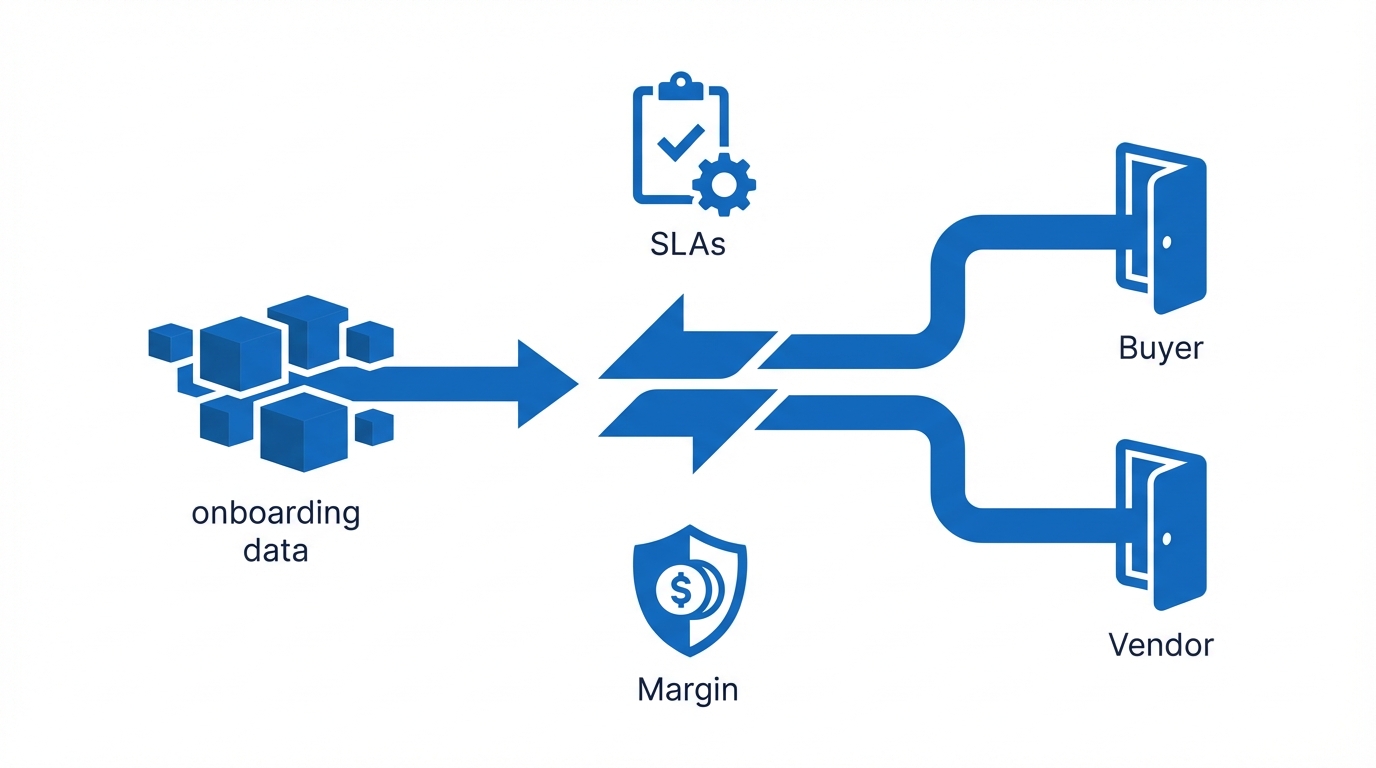
Buyer onboarding affects margin by defining the constraints that govern lead distribution. Coverage boundaries, accepted fields, delivery methods, and pause controls determine which leads can be routed, when they can be delivered, and under what conditions they are considered valid.
When onboarding information is captured as structured inputs, lead routing can enforce buyer requirements consistently. Lead delivery respects coverage at the appropriate level of precision, payloads match expected schemas, and SLA terms shape allocation decisions in real time. Returns decline as a result.
When onboarding details are informal or incomplete, lead distribution relies on approximations. City-level coverage substitutes for postal codes, accepted fields are loosely defined, and SLA terms are handled after delivery. These gaps surface once volume grows and multiple buyers are active, where small mismatches in routing behavior turn into recurring returns and disputes.
What Buyer Onboarding Needs to Capture for Accurate Lead Routing
Buyer onboarding sets the operating rules for lead routing and delivery. To route leads correctly, the system needs more than a buyer name and an endpoint. It needs explicit constraints that can be evaluated on every routing decision.
Coverage should be defined at the level the buyer actually enforces. For most lead distribution programs, that means routing by postal code rather than by city or state. Leads delivered outside agreed coverage remain one of the most common and preventable return reasons.
Accepted fields require the same clarity. Buyer onboarding should specify which fields are required, which are optional, and how each field is validated. Phone format, email structure, consent requirements, and deduplication rules all affect whether a delivered lead is accepted or returned.
Lead delivery requirements should be explicit and testable. Endpoints, authentication methods, expected responses, and retry behavior need to be defined before live traffic begins. When delivery behavior is assumed rather than enforced, failed posts and silent errors are easily mistaken for quality issues.
Onboarding should also capture operational controls that affect allocation. Caps, pause permissions, ramp limits, and SLA targets shape how leads are distributed over time. When these controls are enforced through routing, lead delivery stays aligned with buyer expectations without constant manual intervention.
Onboarding as Routing Input, Not Paperwork
Buyer onboarding only works when it feeds directly into lead routing. Contracts, emails, and spreadsheets don’t influence lead distribution unless their terms are translated into fields and rules the system can evaluate on every decision.
Coverage definitions need to be normalized so routing can filter leads precisely. Postal code–level coverage allows lead delivery to respect buyer territory without relying on broad regional assumptions. This alone removes a large class of avoidable returns tied to coverage disputes.
Field-level acceptance criteria also need to be expressed as enforceable rules. Required and optional fields, validation logic, consent artifacts, and deduplication windows should be known before routing occurs. When these inputs are structured, routing decisions become repeatable and explainable.
Lead delivery behavior should be predictable under failure. Onboarding should define authentication requirements, timeout thresholds, and retry logic so routing can distinguish between a rejected lead and a temporary delivery issue. Without this clarity, delivery errors are misclassified and often disputed.
When onboarding is treated as routing input, lead distribution becomes easier to audit. Each delivery can be traced back to the coverage rules, field requirements, and SLA constraints that allowed it. That traceability shortens resolution when issues do occur.
Why Lead Returns Spike When SLAs Aren’t Enforced in Routing
In most lead distribution programs, SLAs define the conditions under which a delivered lead is considered valid. These conditions usually cover delivery timing, acceptance thresholds, capacity limits, and return rules. Problems start when SLA terms exist in contracts but don’t influence lead routing decisions.
That’s the gap that lead distribution platforms like LeadExec are designed to eliminate. Instead of handling SLA enforcement manually after delivery, LeadExec encodes delivery constraints, from timing thresholds to capacity caps, into routing logic that runs in real time.
When SLAs aren’t enforced through routing, distribution treats all deliveries the same. Leads continue flowing to buyers who are missing delivery windows, rejecting payloads, or operating beyond stated capacity. Returns surface only after volume has already moved.
Acceptance rate is often the first signal of a routing mismatch. A drop usually reflects a gap between buyer requirements and what routing sends. When LeadExec routes against explicit rules rather than intuition, it can adjust allocation or pause delivery automatically when thresholds are missed.
Timing requirements and capacity limits fail in similar ways. Leads that arrive late or exceed agreed volume are returned regardless of quality. When delivery rules are enforced directly in routing, exposure to those returns is limited and the system shifts from reactive dispute handling to proactive prevention.
The core driver of returns is misalignment between buyer expectations and actual deliveries. That misalignment emerges when accepted fields are fuzzy, endpoints aren’t hardened, and coverage is imprecise. Mapping coverage by postal code and defining payload schemas per buyer closes the gap that causes misroutes and failed posts.

The Role of Coverage Precision and Accepted Fields in Reducing Returns
Coverage accuracy is one of the most direct controls in lead routing. When lead distribution relies on city or state boundaries, it inevitably sends leads outside a buyer’s enforceable territory. Those deliveries are easy to identify and easy to return.
Routing by postal code aligns lead delivery with how most buyers define coverage in their contracts. It removes ambiguity from allocation decisions and reduces returns tied to territory disputes. The improvement is mechanical rather than interpretive.
Accepted fields create similar failure modes. Returns are commonly triggered when required fields fail validation or don’t meet documented criteria. Phone format, email structure, consent artifacts, and deduplication windows all affect acceptance.
When accepted fields are enforced before routing, lead distribution improves without changing sources. Payloads arrive in the format buyers expect, rejection reasons become predictable, and disputes narrow to genuine exceptions.
The Hidden Costs of Misrouting and SLA Breaches
Misrouting and SLA breaches create costs that don’t show up immediately in volume reports. Each failed delivery, return, or rejection adds handling time across operations, finance, and account management. The work is repetitive, but it compounds as volume and buyer diversity increase.
Disputes extend those costs further. Invoices tied to disputed deliveries are often held until issues are resolved, slowing cash flow and complicating forecasting. When returns become frequent, finance teams spend more time reconciling the past than supporting growth.
What Happens When Lead Delivery Fails Silently
Silent delivery failures are among the most expensive problems in lead distribution. A request times out, credentials expire, or a schema changes, and routing continues as if delivery succeeded. Volume appears to move, but nothing arrives.
Because these failures don’t always generate immediate errors, they’re often discovered through returns or reconciliation rather than alerts. By then, multiple leads may be affected and buyer follow-up has already suffered.
When routing doesn’t account for retry behavior, transient failures become permanent losses. Brief outages turn into dropped leads that are never resent. Those losses surface later as disputes or unexplained returns.
Reliable lead delivery requires explicit handling of failure. Timeouts, retries, and fallback paths need to be defined and enforced so routing can distinguish between rejection and temporary error. When failures are corrected in real time, fewer leads are lost and fewer returns follow.
Capacity Misses, Selective Acceptance, and Reassignments
Capacity issues appear when routing sends more volume than a buyer can absorb. Buyers may agree to daily limits or gradual ramps as part of their SLA, but if routing doesn’t enforce those limits, excess leads arrive. Those leads are returned because capacity is already exhausted.
Selective acceptance creates a related problem. When buyers only accept leads that fit narrow criteria, more delivered volume is delayed, reassigned, or returned. Over time, performance metrics blur and diagnosis becomes harder.
Reassignments add friction on both sides. Leads lose timeliness and value as they move between buyers. Operations teams spend time reallocating instead of improving routing accuracy. Elevated reassignment rates usually point to capacity mismatch or unclear enforcement.
Capacity-aware lead distribution reduces these failures. When caps, ramps, and priority rules defined in SLAs are enforced directly in routing, volume stays within agreed boundaries and reassignments decline.
The Human Impact of High Return Rates
High return rates change behavior. Buyers slow spend, question delivery accuracy, and hesitate to scale volume. That hesitation often appears before any formal pause is communicated.
Internally, returns shift attention toward triage. Operations teams review individual deliveries, while account teams manage escalations. The work is reactive and grows with volume.
Trust erodes when issues persist without clear explanation. Buyers want to know whether problems stem from quality, delivery behavior, or enforcement of agreed terms. When answers aren’t clear, conversations drift toward blame.
Clear routing rules and enforced SLAs change those dynamics. Buyers see consistent behavior, teams have shared reference points, and issues are framed as specific constraints. Pauses shorten, disputes cool, and ongoing effort drops.
How These Controls Are Enforced in Practice
Capturing buyer requirements is only useful if those requirements are enforced during lead routing and delivery. In practice, that means translating onboarding details and SLA terms into rules that evaluate every lead before it is sent.
This is where lead distribution systems differ. Some systems record buyer preferences and constraints but leave enforcement to manual review after delivery. Others encode those constraints directly into routing logic, so coverage, accepted fields, delivery timing, and capacity limits are evaluated in real time.
LeadExec is designed around this second approach. Buyer onboarding data is captured as structured inputs that routing can act on immediately. Coverage rules filter leads before allocation. Field validation happens before delivery. Capacity limits and timing requirements shape how volume is distributed as conditions change.
Because these controls operate before delivery, preventable returns are reduced without relying on post hoc review. Routing decisions become repeatable, explainable, and auditable. When a lead is delivered, there is a clear record of which rules allowed it to be sent.
From Monitoring to Enforcement
Acceptance rates, delivery timing, and returns are commonly tracked in lead distribution systems. Tracking alone does not affect routing behavior unless those signals are connected to allocation rules.
When performance metrics are isolated from routing, leads continue to flow even as acceptance drops or delivery conditions degrade. Adjustments are made later, after returns appear, rather than at the point of delivery.
In LeadExec, these signals can influence routing decisions directly. Acceptance thresholds, timing requirements, and capacity limits can adjust allocation or pause delivery as conditions change. Those controls operate as part of lead routing, not as a separate review process.
The distinction matters because timing matters. Monitoring explains what already happened. Enforcement limits how much exposure accumulates before an issue is addressed.
Where LeadExec Fits in a Return-Reduction Strategy
LeadExec fits where lead sellers need buyer requirements to influence routing decisions directly. Coverage rules, accepted fields, delivery timing, and capacity limits are captured during onboarding and applied before leads are delivered. That alignment reduces the gap between what buyers expect and what routing sends.
Because these rules are enforced at the point of routing, lead delivery becomes more predictable. Leads are filtered before allocation, payloads are validated before posting, and volume respects agreed limits as conditions change. Returns still occur, but they tend to reflect real exceptions rather than systematic mismatches.
LeadExec also keeps the operational artifacts connected. Delivery records, returns, and invoices reference the same underlying rules. When questions arise, teams can trace a delivery back to the constraints that allowed it. That traceability shortens reviews and keeps discussions focused on specific conditions instead of general quality claims.
For teams managing multiple buyers and varying requirements, this consistency matters. Routing behavior does not rely on memory or manual checks. It reflects the rules buyers already enforce, applied consistently across lead distribution.
Reducing Returns Without Reworking Your Sources
Reducing returns does not require changing where leads come from. It requires changing how buyer requirements are enforced during lead routing and delivery.
When onboarding details and SLA terms are treated as routing inputs, preventable returns decline. Coverage disputes drop. Field-related rejections become predictable. Capacity overruns are contained before they trigger pauses. The result is less rework, faster resolution, and steadier buyer relationships.
LeadExec supports this approach by turning buyer requirements into routing behavior. It gives teams a way to apply the rules they already operate under, without adding manual review or post-delivery cleanup. For lead sellers focused on reducing returns and stabilizing revenue, that enforcement layer is the difference between managing issues and preventing them.
When buyer onboarding and SLA terms are enforced directly in lead routing, systems like LeadExec help reduce preventable returns by making lead delivery behave the way buyers already expect.
This perspective reflects ClickPoint Software’s long involvement in lead distribution and lead management. Working with lead sellers over extended periods reveals consistent patterns in why returns occur and which routing controls reduce them. LeadExec applies those lessons by enforcing buyer requirements during routing rather than resolving disputes after delivery.
FAQ
What causes lead returns most often?
Lead returns most often result from mismatches between buyer requirements and routing behavior. Common causes include coverage errors, missing or invalid fields, late delivery, and capacity overruns.
How does buyer onboarding affect lead routing?
Buyer onboarding defines the constraints routing must follow. Coverage rules, accepted fields, delivery methods, and SLA terms determine which leads can be routed and under what conditions.
Why is enforcing SLAs in routing important?
SLAs describe how buyers evaluate delivered leads. When those terms shape routing decisions directly, exposure is limited and preventable returns decline.
How can lead sellers reduce preventable returns?
Lead sellers can reduce returns by enforcing coverage at the right level of precision, validating accepted fields before routing, and applying SLA caps and timing rules during lead distribution.
What’s the difference between lead quality issues and routing issues?
Lead quality issues relate to the underlying consumer data. Routing issues occur when valid leads are delivered outside agreed coverage, timing, or capacity constraints.